Climate change is reshaping marine food webs across UK waters and wider Northeast Atlantic seas
5 November 2026
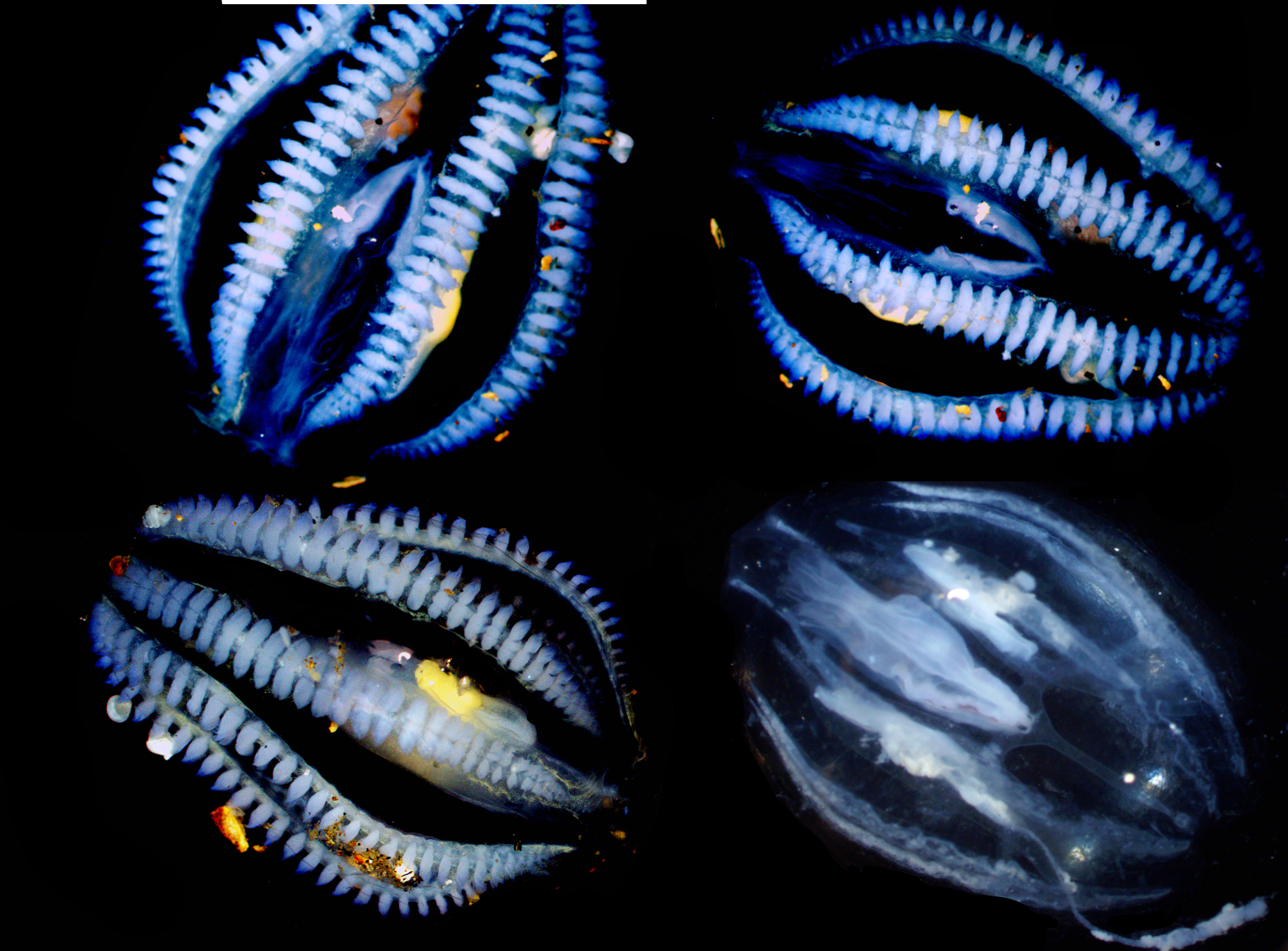
Climate change could fundamentally reshape marine ecosystems across UK waters and the wider Northeast Atlantic in unexpected ways, according to a new major study.
Scientists projected that while fish and seabed-dwelling invertebrates may become more diverse in the coming decades, key plankton groups are projected to decline. This imbalance could disrupt marine food webs and weaken the health and resilience of ocean ecosystems.
The landmark study, led by the Centre for Environment, Fisheries and Aquaculture Science (Cefas), brought together researchers from the University of East Anglia, the Marine Biological Association, UiT The Arctic University of Norway, Royal Netherlands Institute for Sea Research (NIOZ) and National Institute of Aquatic Resources, Technical University of Denmark. It is one of the most comprehensive studies to date of how warming seas are affecting marine life across UK waters and the wider North-East Atlantic.
Published in Science Advances, it examined four key groups that are crucial to supporting ocean ecosystems and food webs: phytoplankton, zooplankton, seabed dwelling (‘benthic’) invertebrates and fish.
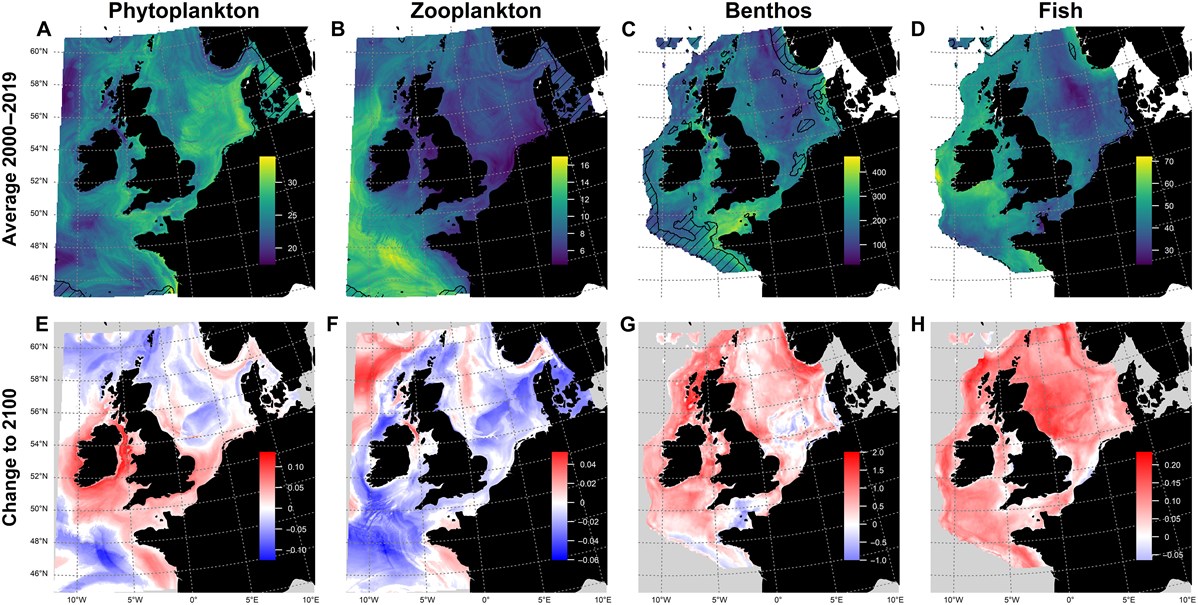
The study found that by mid-century, fish and benthic invertebrate diversity could increase by around 12%, whereas phytoplankton and zooplankton diversity could decline by around 3% and 7%, respectively. This growing imbalance between the foundation of the food web and higher trophic levels could alter ecosystem functioning, with potential consequences for fisheries and global food security.
The research also provides the first estimates of how climate change may alter the contribution of rare species, even where those species are not directly observed. The new approach could be used to detect biodiversity change much earlier than traditional monitoring, providing an early warning that enables more proactive and informed decisions to protect marine biodiversity as demands on the ocean grow.
Challenging assumptions about warming seas
Looking further ahead under nearly 3 °C of warming, the study projects that:
- Fish and seabed dwelling invertebrates are expected to increase in species richness across the areas studied, with regional gains of around 10 fish taxa and 45 seabed-dwelling invertebrate species as species expand into new areas as seas warm.
- Zooplankton shows a slight decline in species richness overall, while phytoplankton shows little change, however this masks regional differences: plankton is projected to decline in many areas, while some southern coastal areas, such as in such as southern UK, Ireland, and France, may see increases in phytoplankton.
- Rare species play an important role in these changes either by spreading into new areas and becoming more common, or by disappearing from places where biodiversity declines as conditions change.
“What surprised us is that warming doesn’t increase or decrease biodiversity across the board”, said Dr Elena Couce, Quantitative Marine Ecologist at Cefas and co-lead author of the study. “While some groups higher up the food chain, like fish, may gain species in parts of the Northeast Atlantic, key plankton groups that underpin marine ecosystems are projected to lose species.”
“If predator diversity rises while prey diversity falls, that has the potential to disrupt the food chain. Our results show that climate change could reshuffle marine biodiversity unevenly across the food web, and that gains in some groups do not necessarily mean the ecosystem as a whole is becoming more resilient,” added Dr Lily Greig, Marine Ecologist at Cefas who also co-led the study.
“What surprised us is that warming doesn’t increase or decrease biodiversity across the board”, said Dr Elena Couce, Quantitative Marine Ecologist at Cefas and co-lead author of the study. “While some groups higher up the food chain, like fish, may gain species in parts of the North- East Atlantic, key plankton groups that underpin marine ecosystems are projected to lose species.”
“If predator diversity rises while prey diversity falls, that has the potential to disrupt the food chain. Our results show that climate change could reshuffle marine biodiversity unevenly across the food web, and that gains in some groups do not necessarily mean the ecosystem as a whole is becoming more resilient,” added Dr Lily Greig, Marine Ecologist at Cefas who also co-led the study.
A new scientific approach
Unlike traditional studies that look at individual species using historical data, the scientists used multiple long term data sets and advanced statistical modelling to compare biodiversity change consistently across different groups of organisms.
The scientists integrated information from over 180,000 samples collected over 43 years and used advanced machine learning techniques to determine the relationship between biodiversity and environmental change. This enabled them to predict climate-driven biodiversity change in the North-east Atlantic up until the year 2100.
A key breakthrough was applying a standardised approach to estimate biodiversity change rather than relying on traditional assessments that typically focus on common species, such as commercial fish species or invertebrates.
Dr Murray Thompson, Head of Ecology and Biodiversity Science at Cefas, and senior author of the report, explained: “In traditional biodiversity surveys, the more you look, the more you find. That’s a key challenge for scientists because our understanding of biodiversity is shaped by patchy or incomplete information.”
“Fortunately, this relationship can also be used to estimate how many species might be found if you were to keep on looking”.
For example, rarer species contribute significantly to species richness; however, this also makes them hard to detect. To address this, the scientists used mathematical models to estimate their contribution, predicting how many additional species might be detected if sampling effort were increased.
“This is a significant step, because rare species are often among the first to be lost as sea temperatures rise, but some of the most challenging to observe.”” he added.
Implications for conservation
The study highlights the need to strengthen how marine biodiversity and ocean health are monitored and managed. Many current biodiversity assessments rely on different 'indicator species', such as such as commercially exploited fish species or species of conservation. Crucially, they tend to look backwards at past changes, rather than predicting potential risks.
In contrast, this new approach takes a more holistic view of climate impacts and is designed to look ahead.
By identifying where biodiversity is changing fastest, and which parts of the ecosystem are most at risk, the study provides new evidence to inform conservation and marine management options, including the design and adaptation of marine protected areas or areas for offshore wind development.
Predictive biodiversity indicators, such as these, could provide an ‘early warning’ system for potential changes, helping policymakers and industry understand which areas are most vulnerable to climate change to better adapt to future changes and build resilience into future management strategies.
“Our aim was to develop indicators that predict impacts across different groups of species in the food chain. This could help fill important gaps in the tools available to manage the marine environment as climate baselines shifts,” said Dr Greig.
"If we want to improve the health of our oceans while remaining resilient to climate change, we need to manage towards a future biodiversity target—and that means building decisions on robust predictions, not just past trends," added Dr Couce.
The datasets used in this study can be found here: Cefas Data Portal - View
This research was supported by the EU-funded ACTNOW and B-USEFUL Horizon projects.
Related to this article
Topic

Case studies





People


































News


Further Reading